A DAY OF HAPPINESS TO CELEBRATE
International Day of Happiness

Keep Calm. Stay Wise. Be Kind
HAPPINESS IS A THING WHAT EACH ONE WONDERS IN HIS/HER LIFE FOR A LONG TIME.
IT'S A TYPE OF EMOTION WHICH ALWAYS GIVES A SATISFACTION,BESIDE ANY PROBLEMS IT'S THE TYPE OF FEELING WHICH CAN HANDLE ANY MOODS ANYTIME ANYWHERE.
The International Day of Happiness is celebrated worldwide every year on 20 March, and was originally conceptualized and founded in 2006.
CEO of the United Nations New World Order project, to advance happiness as a fundamental human right for all human beings, and happ, as new economic system, theory, and philosophy, which achieves the United Nations global goals, and the happiness, well-being, and freedom of all life on earth.
The next international day of happiness is March 20, 2021.
March 20th is the International Day of Happiness. As we face a global crisis together, let’s find positive ways to look after ourselves and each other.
This campaign is a global celebration to mark the United Nations International Day of Happiness. It is coordinated by Action for Happiness, a non-profit movement of people from 160 countries, supported by a partnership of like-minded organisations.

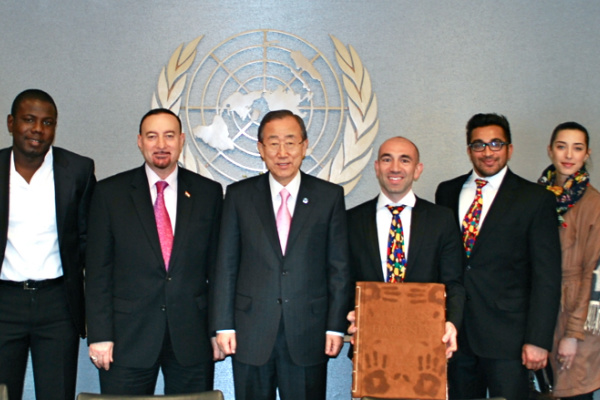
Ban Ki-moon endorses UN International Day of Happiness
A profound shift in attitudes is underway all over the world. People are now recognising that 'progress' should be about increasing human happiness and wellbeing, not just growing the economy.
March 20 has been established as the annual International Day of Happiness and all 193 United Nations member states have adopted a resolution calling for happiness to be given greater priority.
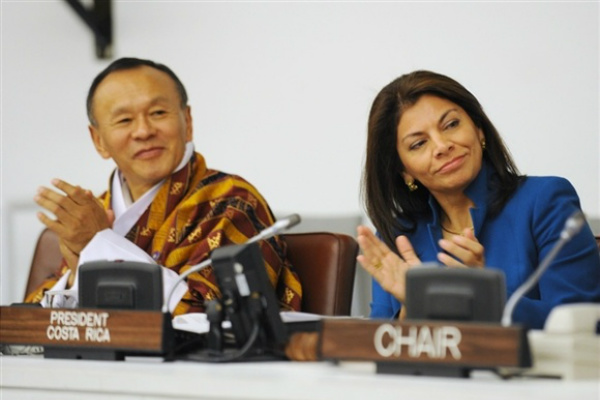
First ever UN conference on Happiness and wellbeing
In 2011, the UN General Assembly adopted a resolution which recognised happiness as a “fundamental human goal” and called for “a more inclusive, equitable and balanced approach to economic growth that promotes the happiness and well-being of all peoples”.
In 2012 the first ever UN conference on Happiness took place and the UN General Assembly adopted a resolution which decreed that the International Day of Happiness would be observed every year on 20 March. It was celebrated for the first time in 2013.
YOUR HAPPINESS IS PART OF SOMETHING BIGGER


The 2015 Day of Happiness campaign focused on relationships. We are a social species and we thrive when we’re closely connected to others. But modern society is leaving more and more people feeling disconnected, isolated or lonely. On the day, thousands of people all around the world reached out to make newpositive connections with others.
“This International Day of Happiness is more than just a fun celebration, it also remind us all that the world is a better place when we connect with and care about the people around us”
RECLAIM HAPPINESS




The 2014 Day of Happiness campaign asked people to share authentic images of what makes them happy to "Reclaim Happiness" back from the fake commercial images of happiness that we are so often bombarded with. Many tens of thousands of people shared images and the social reach was estimated to be over 13 million people globally.
“It’s really inspiring to see so many people sharing photos of what really makes them happy. In a world where we’re bombarded with fake images of happiness in the adverts and the media, these more authentic pictures remind us that the best things in life aren’t material things. ”
HAPPY HEROES

For the very first International Day of Happiness in 2013, events took place all over the world and we celebrated hundreds of "Happy Heroes" - those people in our communities who do so much to bring happiness to others.
“International Day of Happiness has struck a chord. There were celebrations all over the world: meditation in Bhutan, happy flash mobs in London, laughter yoga in Hong Kong and screenings of the film Happy in coffee shops all over the world. The day had a trending hashtag on twitter and its own website dayofhappiness.net”

ORGANISATION FOR INTERNATIONAL HAPPINESS DAY

How to Celebrate: Annual Commemoration and Observance
United Nations resolution 66 281 International Day of Happiness calls on all 7.8 billion human beings to celebrate the international day of happiness.
Every year since 2013, UNIDOHappiness, the official home and secretariat of the UN international day of happiness launches the "Ten Steps To Global Happiness" campaign which has become an annual tradition. The international day of happiness is celebrated in 206 countries "through social media, local, national, global, and virtual events, UN ceremonies and campaigns, and independent celebrations around the world, consistent with Article 2 of UN resolution 66 281, and the spirit of UN resolution 65 309". Highlights include the hashtag "#InternationalDayOfHappiness" trending on social media, and the UN's launch of the World Happiness Reports, a ranking of the world's happiest countries.
UNIDOHappiness: Ten Steps To Global Happiness
UNIDOHappiness, the official home and secretariat of the UN international day of happiness announces the annual theme every year since the first international day of happiness was celebrated in 2013. As part of the annual theme announcement, UNIDOHappiness also launches the "Ten Steps To Global Happiness" tradition, which are "ten easy steps any individual, organization, or country, can take on the international day of happiness and throughout happiness week to celebrate the international day of happiness, while also advancing the happiness, wellbeing, and freedom of all life on earth by 2050 when the United Nations forecasts global population to reach 10 billion".
Step 1: "Tell Everyone"
The first step in the Ten Steps To Global Happiness, is "Tell Everyone" with the idea and purpose of "spreading the word" about the existence and mission of the international day of happiness. Tell Everyone is designed to be very simple such as wishing a friend, family member, professional colleague, group, or stranger a "Happy International Day of Happiness" just as one might wish someone a "Happy Birthday" or a "Happy Holidays". The idea of "Tell Everyone" as the first step is also to leave an open window for creativity, and more innovative, and complex ways of "Telling Everyone" with the broader purpose of informing as many people as possible about the international day of happiness. These examples include writing a song, a youtube video, or printing out and sharing the UN 'Happiness Resolutions' in a public setting such as a school, office building, restaurant, or coffee shop. The idea according to the UNIDOHappiness website is "to have fun with it", and to be creative in expressing oneself while getting the news out about the international day of happiness.
Step 2: Do What Makes You Happy
The second step in the Ten Steps To Global Happiness annual campaign tradition is "Do what makes you happy". The second step is designed to emphasize the notion that happiness is a fundamental human right. The second step emphasizes the values, principles, and ethos of the ancient philosophers of east and west, the enlightenment economists and philosophers, and ideals encompassed in the US Declaration of Independence which declares that all human beings are entitled to certain fundamental 'inalienable rights' "including the right to life, liberty and the pursuit of happiness." The second step also employs the "happiness is contagious" mechanism as a way of spreading happiness to others by doing what makes one happy. The second step is also meant to communicate more complex concepts about happiness such as the notion that happiness is actually achieved not only through "self interested" activities but also through giving, helping others, being grateful, among other ways of living and acting which might not be immediately obvious to then casual happiness seeker, but which wide ranging research reveal are in fact the "secrets" to happiness.
Step 3: Give and Spread Happiness To Others
The third step is "give and spread happiness to others". This 3rd step directly emphasizes the idea that giving and spreading happiness to others increases happiness levels for both the doer and the recipient, thereby increasing happiness of all involved, and more broadly, expanding global happiness levels.
Step 4: Celebrate a Happiness Month Event
Step four is to "celebrate a happiness month event". Step 4 encourages celebration of the international day of happiness by participating in an international day of happiness or happiness month event - virtual, local, national, international, and/or official, that is occurring around the world. The purpose of Step 4 is to promote independent initiative of people, organizations, and nations around the world to celebrate the international day of happiness and happiness month in a way that is consistent with article 2 of UN resolution 66 281, and thereby activates increased celebration, awareness, and global happiness levels.
Step 5 is to "share happiness on social media" across a range of topics including "doing what makes you happy", "giving and spreading happiness to others", "thoughts on happiness and a happier world", as well as anything related to happiness including articles on the topic of happiness. The idea and purpose of step 5 is to increase worldwide happiness levels through the exponential power of social media to spread happiness with the idea that happiness is a contagious and has an intrinsic multiplicative and exponential property.
Step 6: Promote the UN 'Happiness Resolutions'
Step 6 is to promote the two UN 'happiness' resolutions, which are the two UN resolutions on the subject of happiness, "UN 65 309: Happiness Toward a Holistic Approach To Development", and "UN 66 281: International Day of Happiness". The purpose of step 6 is to raise greater awareness about the two resolutions dealing with happiness, which call for happiness as a human right, and a new economic paradigm to achieve the happiness, wellbeing, and freedom of all life on earth
Step 7 is to read and share the World Happiness Reports. The purpose of step 7 is to encourage individuals, organizations, and nations to celebrate the international day of happiness by reading and sharing the World Happiness Reports, which include research about what leads to happy people, schools, companies, nations, and society. Step 7 intends to increase global happiness levels through greater awareness of the information and key takeaways of the World Happiness Reports.
Step 8: Advance the UN's Global Goal
Step 8 is to work toward advancing the 17 global goals and the 169 targets set by the United Nations to achieve by 2030, an integral part of achieving the happiness, wellbeing, and freedom of all life on earth by 2050.
Step 9: Become a Global Partner & Ambassador
Step 9 is to become a global partner and/or ambassador of the international day of happiness, primarily through "badging in" which broadly is defined as using the UNIDOHappiness official logo and branding on websites, printed materials, and similar to demonstrate solidarity and support with the international day of happiness, as well as, to promote happiness levels on an individual, community, global, and societal level.
Step 10: Adopt and Spread Happytalism
Step 10 is to adopt and spread happytalism, a new economic system, socio-political philosophy, and global human development paradigm which places the primacy of happiness, wellbeing, and freedom at the center of economic and human development and all life, and which seeks as its ultimate end, the happiness, well-being, and freedom of all life on earth. Step 10's purpose is to increase global happiness levels by calling on those celebrating the international day of happiness, to shift to a happytalist mindset and way of life, as a mechanism for in turn, expanding global happiness levels.
History and Background
In 2006, the international day of happiness was originally conceived by Jayme Illien, the founder of happytalism, and CEO of the United Nations New World Order Project, as a way to advance happiness a fundamental human right, and a new economic theory "happytalism", as a new economic and human development system to replace old world economic systems (from 5th to 20th century) such as capitalism, communism, socialism, mercantilism, colonialism, and feudalism, among others, all created more than 150-1000 years ago.
Origin
The origin of the international day of happiness began with the 1980 birth and rescue of an orphan who was found abandoned by a roadside in Kolkata, India, by missionaries of Saint Mother Teresa, who first named him Adam, and sent him to live in America with a nurse named Anna Belle, who changed Adam's name to Jayme.
Adam, (now named Jayme by his caretaker and adoptive mother), traveled around the world to war torn and poverty stricken developing countries, to save the lives of other orphaned and abandoned children, beginning at a young age and throughout his formative years, with his adoptive mother Anna Belle, who had founded a non profit charity, which helps save the lives of orphaned and abandoned children through international adoption and humanitarian assistance programs. Adam was horrified and appalled at the suffering of thousands of orphaned and abandoned children in the streets, slums, and orphanages, left behind by economic systems, governance, nations, and society. During these early years, Adam then made a promise, the "original promise", to do everything possible to improve the situation of his suffering orphan brothers and sisters, and to research, develop, and implement permanent solutions to end their suffering.
Genesis
In 2006, twenty-six years later, Illien who had studied and worked in international economic development, had initially presented the idea of recognizing happiness as a human right and "happytalism" as a new economic theory, system and human development paradigm to prominent economists, academics, political scientists, philosophers, heads of state, and development experts in a position to advance the concept into the mainstream discussion of human development. However, Illien's idea was initially rejected. In response, Illien came up with the idea for an "international day of happiness" as a new global day of awareness to secure the principle, and ideal of happiness as a human right, as a new economic system to solve the great challenges facing humanity, and the ultimate purpose of every human being, nation, and society, with the unanimous support of all 193 UN member states, and ultimately the people of the world, present, and in the future. Illien drew inspiration for conceptualizing and founding the international day of happiness as an annual celebration into perpetuity, which would raise the global awareness and conversation about happiness as a fundamental human right, new economic system, and as the ultimate purpose for individuals, families, communities, nations, and society, from other leaders, endeavors, and milestones in history such as the founders of the United States of America, the US Declaration of Independence and Independence Day, and the founders of the United Nations and UN Day.
Global Creation Campaign
In 2008, Illien launched the United Nations New World Order project with co founder Ndaba Mandela, grandson of former President Nelson Mandela, which along with several UN-based policy initiatives, envisioned the creation of the international day of happiness as a global day of awareness, which commemorates and recognizes happiness as a human right, and a fundamental, universal human goal, and calls for a new human development paradigm which achieves the happiness, wellbeing, and freedom of all life on earth.
In 2011, Illien brought the idea and concept of creating a new global day of awareness, the International Day of Happiness, to senior United Nations Officials.
By 2012, Illien successfully campaigned to unite a global coalition of all 193 United Nations member states, and secured the endorsement of the President of the UN General Assembly, and then Secretary-General of the United Nations, Ban Ki moon, for the idea and concept of establishing a new official international UN calendar day of observance known as the International Day of Happiness, through the adoption of a new UN resolution. Illien authored UN resolution 66/281, which was ultimately adopted by the unanimous consensus of all 193 UN member states of the United Nations General Assembly on 28 June 2012.
UN "Happiness" Resolutions
The UN Happiness resolutions are the two UN resolutions, UN 65 309 and UN 66 281, which address the topic of happiness. Collectively, the UN happiness resolutions resulted in the creation of the international day of happiness (66281), and the UN's call for a new economic paradigm of happiness, wellbeing, and freedom (UN 65309, UN Charter).
Gross global happiness and the first UN high-level meeting on happiness and wellbeing
On 2 April 2012, the United Nations hosted the first high-level meeting on happiness and wellbeing: Defining A New Economic Paradigm. At this meeting of heads of state, ministers and high-level delegates from over thirty countries and intergovernmental organizations like the Organisation for Economic Co-operation and Development, the United Nations Secretary General Ban Ki moon.
The resolution also celebrates a modern legal and constitutional history of humankind which recognizes happiness as a human right and goal.

History of happiness development initiatives
The following historical timeline lists happiness development milestones and international happiness initiatives.
- 1972
- Bhutan's King introduced the Gross National Happiness (GNH) philosophy and its four development pillars at an international conference.
- 2005
- International Institute of Management introduced second generation GNH (GNH 2.0), the first GNH Index and the first Global GNH Index Survey.
- 2006
- The Genuine Progress Indicator was updated from a green measurement system to a broader concept that included quantitative measurement of well-being and happiness. The new measure is motivated by the philosophy of the GNH and the same notion of that subjective measures like well-being are more relevant and important than more objective measures like consumption. It is not measured directly, but only the factors which are believed to lead to it.
- 2006 – The International Institute of Management published a policy white paper calling for the implementation of GNH philosophy in the US and inviting scholars to build upon the GNH Index framework.
- 2007
- Thailand releases Green and Happiness Index (GHI).
- Illien Foundation for Children, Inc. launches an initiative to find "new economic models and means to reduce poverty, empower youth, and promote sustainable solutions to human happiness."
- 2009
- In the United States, the Gallup poll system launched the happiness survey collecting data on national scale.[The Gallup Well-Being Index was modeled after the GNH Index framework of 2005. The Well-Being Index score is an average of six sub-indexes that measures life evaluation, emotional health, work environment, physical health, healthy behaviors, and access to basic necessities. In October 2009, the USA scored 66.1/100.
- 2010
- The Center for Bhutan Studies further defined the original four pillars with greater specificity into eight general contributors to happiness—physical, mental and spiritual health; time-balance; social and community vitality; cultural vitality; education; living standards; good governance; and ecological vitality. The Bhutan GNH Index.
- The Oxford Poverty and Human Development Initiative OPHI at the University of Oxford in UK, launched the Multidimensional Poverty Index (MPI) for the United Nations Development Programme, (UNDP). Similar to the GNH Index of 2005, OPHI promotes collection and analysis of data on five dimensions including Quality of work, Empowerment, Physical safety, Ability to go about without shame, Psychological wellbeing.
- 2011
- UN General Assembly Resolution 65/309, titled "Happiness: towards a holistic approach to development"
- The United Nations released the World Happiness Report
- Canadian Index of Wellbeing Network (CIW Network) releases The Canadian Index of Wellbeing (CIW)
- A leading Israeli newspaper Haaretz, published an article suggesting that western GDP economics is an incomplete development model and called for the adoption of Bhutan's GNH philosophy and Jones' GNH Index in Israel.
- 2012
- A report prepared for the US Congressman Hansen Clarke, R, Researchers Ben, Beachy and Juston Zorn, at John F. Kennedy School of Government in Harvard University, recommended that "the Congress should prescribe the broad parameters of new, carefully designed supplemental national indicators; it should launch a bipartisan commission of experts to address unresolved methodological issues, and include alternative indicators." They proposed that the government can use the survey results to see which well-being dimensions are least satisfied and which districts and demographic groups are most deficient, so as to allocate resources accordingly. The report list the Gross National Happiness Index and its seven measurement area as one of the main frameworks to consider.
- Professor Peter T. Coleman, a world-renowned director of the International Center for Cooperation and Conflict Resolution at Columbia University, suggested that Jones' GNH Index initiative could inform the Global Peace Index Initiative GPI.
- South Korea launched Happiness Index citing the GNH Index framework.
- The Government of Goa, India published a strategy for socioeconomic development citing the GNH Index as a model for measuring happiness.
- The city of Seattle in Washington, launched its own happiness index initiative, emphasizing measures similar to the GNH Index.
- UN Adviser and CEO of Illien Global Public Benefit Corporation Jayme Illien brings the idea of creating the International Day of Happiness to the United Nations, drafts UN Resolution 66/281: International Day of Happiness, campaigns for its adoption by consensus of all 193 UN Member States, and gains support of UN Secretary-General Ban Ki-moon.
- 2014
- In Vietnam, the prime minister Nguyen Tan Dung has ordered by decree to organize the International Day of Happiness every year across the country.
HOW TO RESPOND
Here are 3 positive steps we can all take when facing difficult times:

There are lots of things outside our control. Let’s remember to breathe and focus on what really matters so we can respond constructively.

Making wise choices helps everyone. Let’s choose positive actions that support our wellbeing and help others to do the same.

We’re all in this together, even when we’re forced apart. Let’s stay connected and reach out to help others who may be in need.

JOIN THE
10 DAYS OF HAPPINESS
link:-
.........................................................
LET ME KNOW IN THE COMMENTS BELOW IF YOU LIKE BEING HAPPY OR NOT
Comments
Post a Comment